

Worn or damaged stair finish
A staircase is used intensively every day, and it shows: worn treads, a handrail that has gone dull, or peeling varnish at the nosing of the treads. Because a staircase takes so much wear, its finish requires a different approach than an ordinary wall or door.
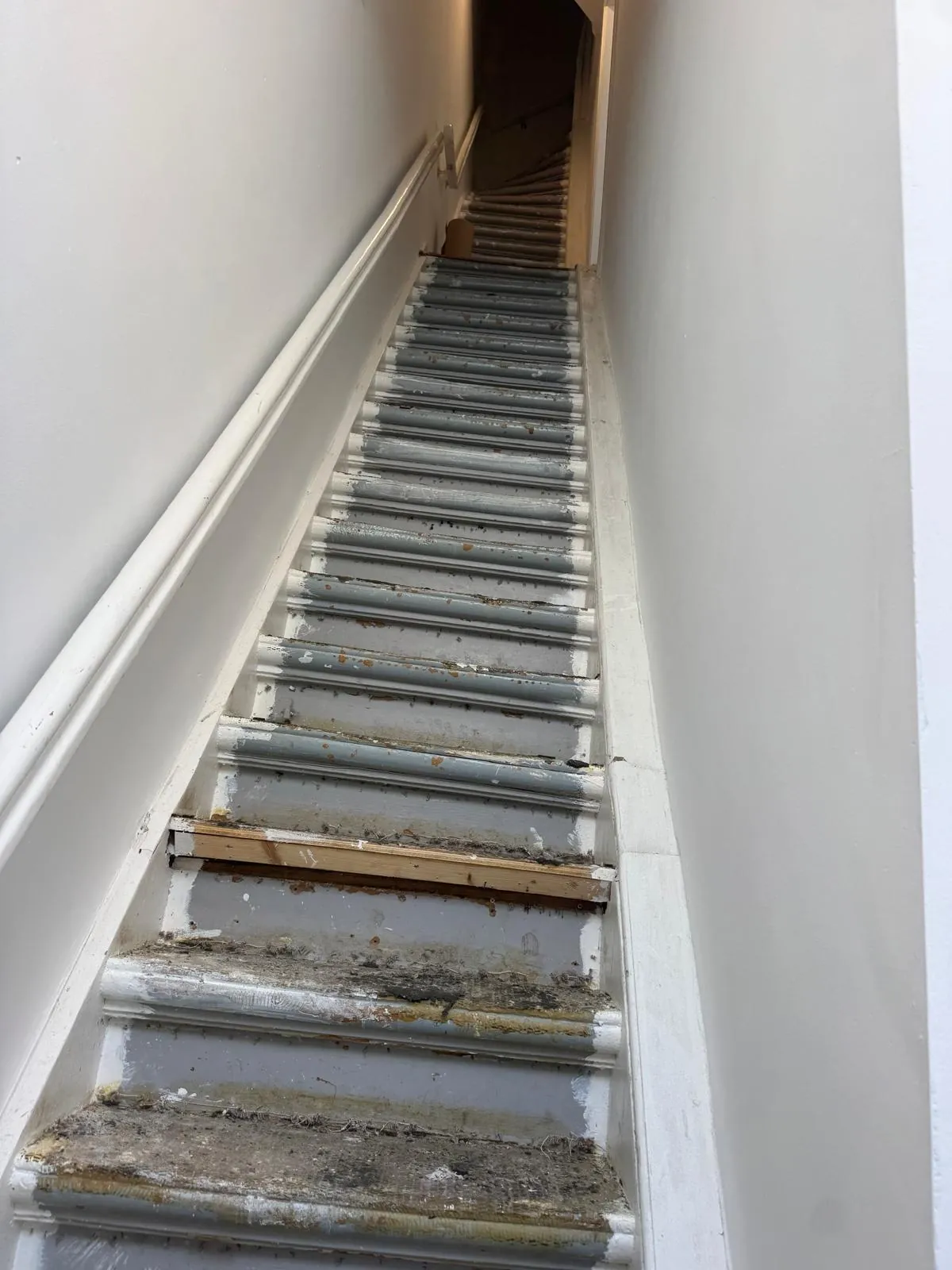
Cause
Daily foot traffic, shifting feet and gripping the handrail gradually wear away the paint or varnish layer, particularly on the nosing of the treads and on the handrail.
How to recognise it
- Worn, dull patches on the treads
- Peeling varnish or paint at the edges and nosing of the treads
- A grimy, dulled look to the handrail from hand contact
- Scratches or damage on the spindles or balusters
What's the risk?
- Unprotected wood on the treads wears down faster
- A neglected staircase affects the first impression of the entire home
- Smooth, worn patches can provide less grip over time
The solution
We sand the staircase completely, repair damaged areas and finish with a wear-resistant stair paint or varnish that can withstand intensive daily use.
For extra grip and durability, we can add an anti-slip additive to the treads on request.
When painting is enough
If the wood beneath the wear is still sound, thorough sanding and a new, wear-resistant coat of paint or varnish is enough.
When repair is needed
In the case of loose treads, spindles or structural wear, wood repair is needed first before the finish can be applied.
How Painting Company solves it
- Inspection of treads, handrail and spindles
- Full sanding and degreasing of the staircase
- Repair of damaged areas
- Finishing with a wear-resistant stair paint or varnish, optionally with anti-slip
Preventing worn or damaged stair finish: practical maintenance
The best way to prevent worn or damaged stair finish is to regularly check the spots where the problem most often starts, and fix small defects straight away instead of waiting. Daily foot traffic, shifting feet and gripping the handrail gradually wear away the paint or varnish layer, particularly on the nosing of the treads and on the handrail.
A fixed maintenance cycle — for example periodically touching up vulnerable spots such as sealant joints, corners and sills — is often cheaper than waiting until a problem shows up in full. Not sure whether your situation needs attention? A free, no-obligation inspection gives you clarity.
Why choose Painting Company
Painting Company has now completed over 1374 projects and serves more than 261 VvE's, with a team of 14+ permanent painters and an average Google rating of 4.9. With worn or damaged stair finish, it's not just about the visible paint layer but also the structural repair underneath — we have daily experience with exactly that.
As part of CrumBouw and GoedkoopSteigerHuren.nl, we can combine this with interior painting and, if the situation calls for it, scaffolding — all through a single point of contact. Request a free, no-obligation quote, and we'll think it through with you.
Frequently asked questions about worn or damaged stair finish
How often does a staircase need to be refinished?
That depends on use, but for a family home, touching up the most heavily used spots (treads and handrail) every 3 to 5 years is common.
Can you make the staircase slip-resistant?
Yes, we can incorporate an anti-slip additive into the finish coat of the treads without compromising the appearance.
Can I fix worn or damaged stair finish myself, or is this a job for a professional?
Small, surface-level cases can sometimes be touched up yourself, but if you're unsure we'd advise against it. We sand the staircase completely, repair damaged areas and finish with a wear-resistant stair paint or varnish that can withstand intensive daily use. Repairs done incorrectly often end up costing more in the long run than calling a professional painter straight away.
How long does it take to fix worn or damaged stair finish?
That depends a lot on the extent and accessibility of the spot. For a limited, localised case the work is often done within a day or a few days; larger areas take longer. During the free assessment we give a concrete estimate for your situation.
What does it cost to fix worn or damaged stair finish?
That varies by situation — the extent, the accessibility and whether painting is also needed all play a role. We give a clear quote after a free, no-obligation assessment, so you know exactly where you stand beforehand.
What happens if I ignore worn or damaged stair finish?
Unprotected wood on the treads wears down faster The longer you wait, the bigger the eventual repair — and the cost that comes with it — tends to be.
What's the best time of year to have this addressed?
For interior work the season makes little difference; we plan mainly around your own schedule and the accessibility of the room.
How do I stop worn or damaged stair finish coming back after it's fixed?
We address not just the visible symptom but also the underlying cause — daily foot traffic, shifting feet and gripping the handrail gradually wear away the paint or varnish layer, particularly on the nosing of the treads and on the handrail. Periodic maintenance also helps: touching up small damage in time prevents a small problem growing back into a bigger repair.
What materials and techniques do you use for this?
We work with professional materials and paint systems matched to the surface and the load it faces — not standard DIY-store paint. Where needed we combine that with specialised wood repair systems or primers matched to the specific cause.
Do you offer a guarantee on the repair work?
We always discuss guarantee terms upfront and set them out clearly in the quote, so you know exactly what to expect before we start.
Can you combine this with interior painting?
Yes, we combine this regularly. If we're already on site for interior painting, it's often more efficient to include this in the same schedule rather than planning it separately.
Is worn or damaged stair finish worse on older or listed buildings?
This comes up more often on older properties, simply because the woodwork and facades have been exposed to the weather for longer and often already carry several layers of paint. On listed-building details we work with extra care to preserve the original profiling and appearance.
How do I spot early signs, before it's visibly bad?
Worn, dull patches on the treads
Is a visual inspection enough, or is more investigation needed?
In most cases a thorough visual inspection by a professional painter is enough to determine the extent. If there's doubt about the underlying structure, we look a little deeper, for example by gently testing whether the wood can still bear weight.
Do you also work on commercial buildings and real estate, not just homes?
Yes. We fix worn or damaged stair finish for private homes, VvE's and real estate such as commercial buildings and apartment blocks. The approach is similar, though larger properties are often planned in phases.
Can worn or damaged stair finish affect the value of my home?
Visible damage to window frames, facades or woodwork can create a negative impression during a sale or valuation and raise questions about deferred maintenance. Addressing it in time avoids that discussion and keeps the property looking well cared for.
Do I need to prepare anything before you come round?
No, that's not necessary. Just make sure the spot is reasonably accessible; we handle everything else, from inspection to execution.
Do you use scaffolding if the spot is high up or hard to reach?
If the situation calls for it, we arrange that through GoedkoopSteigerHuren.nl, part of the same organisation as Painting Company. We combine that into a single request, which saves coordination steps.
How quickly can you come round for an assessment?
We respond to requests quickly and schedule the assessment as soon as possible in consultation with you. Request a free, no-obligation quote and we'll get in touch.
What's the difference between touching up and a full repair?
If the wood beneath the wear is still sound, thorough sanding and a new, wear-resistant coat of paint or varnish is enough. In the case of loose treads, spindles or structural wear, wood repair is needed first before the finish can be applied.
Ready for your next project?
Request a free, no-obligation quote today. We get in touch, think along with you and deliver the best paintwork for your home, VvE or property.